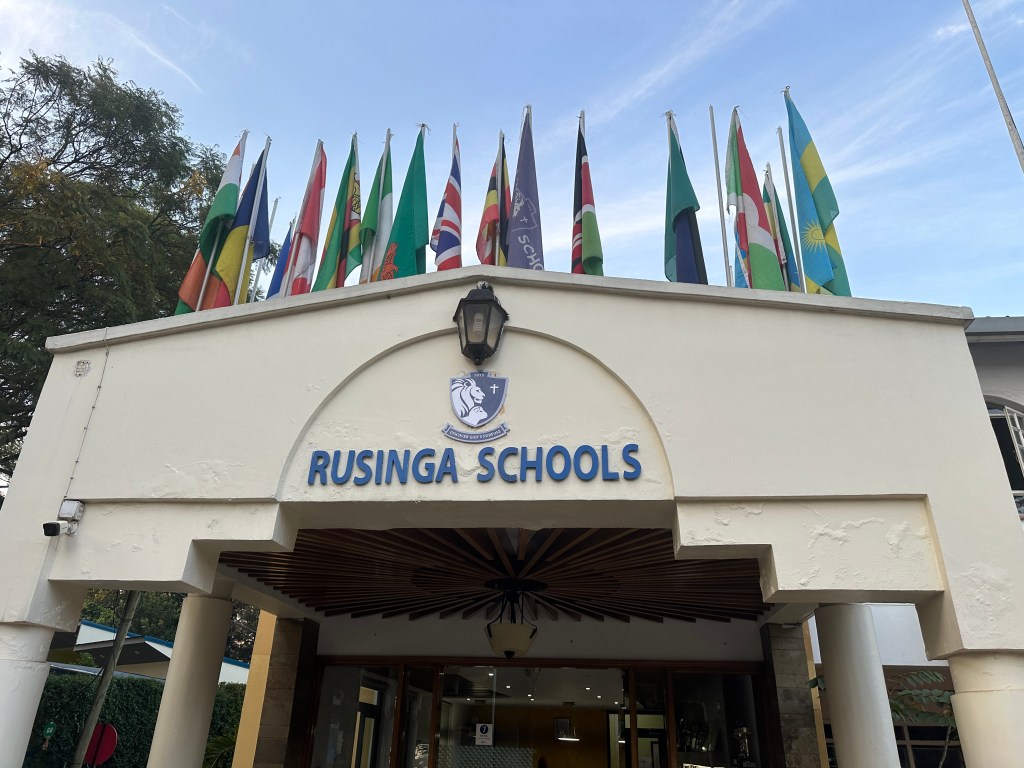
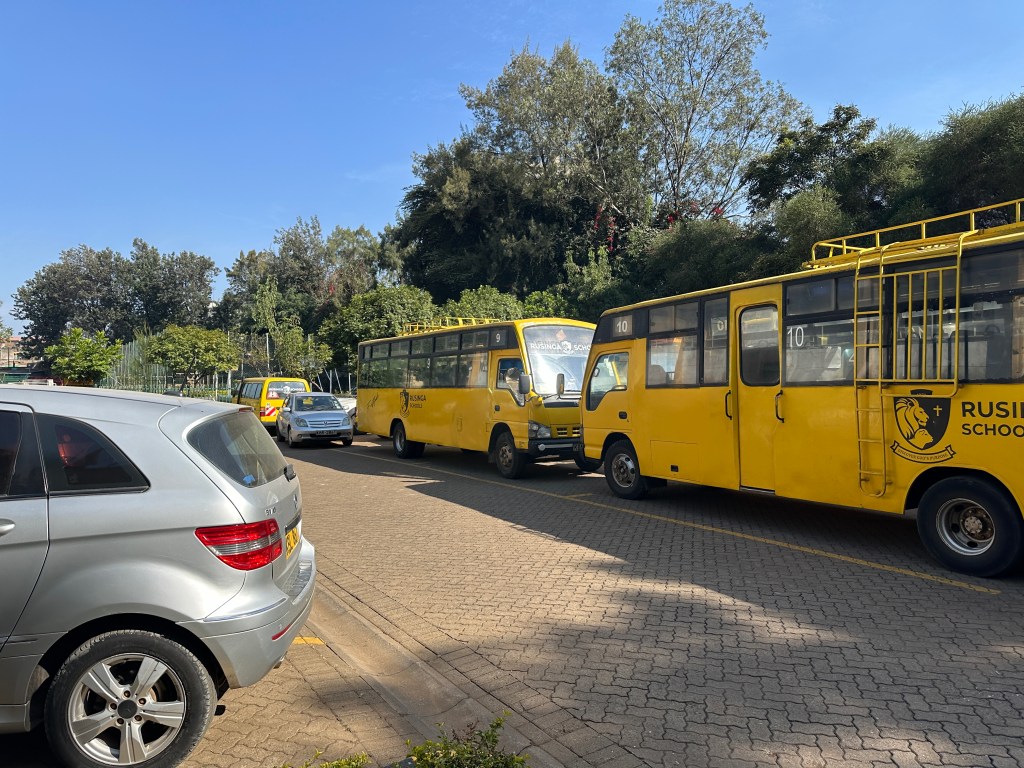
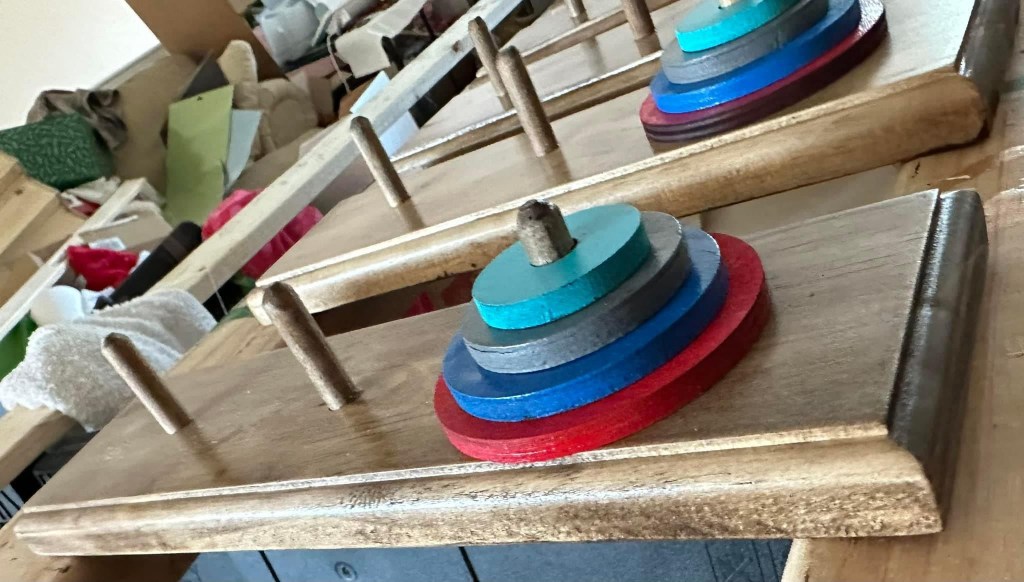
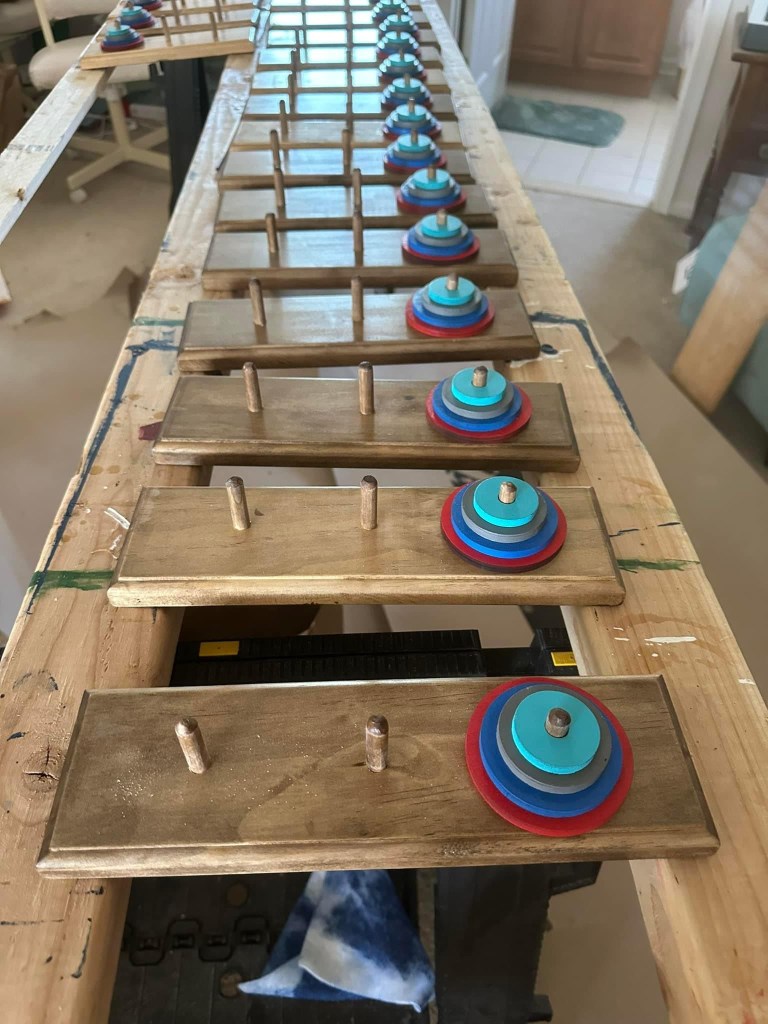
Today we visited two very different schools. This post will be a little light on pictures out of respect for the privacy of the students. First thing this morning we went to the school where my host, Paul, sends his children. It is an international school that caters to locals and expats from other parts of African. The school has a non-denominational Christian mission and follows the British curriculum. I met with the head of the school who they interestingly call the Head Teacher, who provided a tour of the campus. They are what we would refer to as a K-12 school and it was great to feel the energy as the students arrived and the campus began to buzz with that energy that would be familiar to all educators. They were finished with their exams and due to the disruptions from the protests were doing their best to finish the school year this week. I sat in on the morning meeting with the year 12 students that I would describe as very similar to our advisory system. The teacher was using this time to lead a discussion about the protests. Interestingly, most everyone in Kenya views the protests as the purview, good or bad, of the younger generation and all people you talk to talk about the corruption present in the current government and the need for action. They are actually called the “Gen Z” protests and the discussion was interesting and robust, though I know the students were holding back because of our intrusion on their space. I could easily see this group and our students engaging in meaningful conversation around the issues that were brought up. After very formal and polite introductions, I was asked to say something. It was a REALLY uncomfortable moment and I am grateful for the years of practice leading similar discussions at MFS in advisory that hopefully resulted in me not saying something inappropriate or offensive. I was able to quickly retreat to the comfort and safety of talking about mathematics and we spent the next 35 minutes working on the Tower of Hanoi problem using the puzzles that Chris Herte had made for me and speaking the universal language of math (or maths as they like to say). It was a lot of fun and we actually had to pry them off the puzzles to go to their next engagement.
Here is my host Paul and the maths teacher for this group. She joined right in and was gracious and welcoming. The thought going forward is we will try and bring our students together for discussion around some meaningful issue (climate change??) and then do an afternoon service project together.

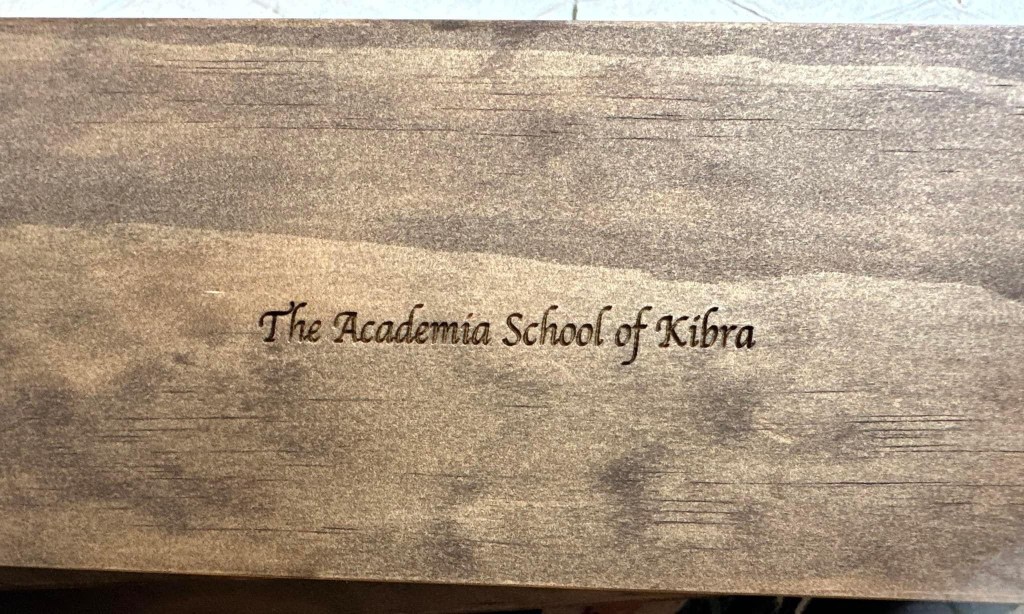
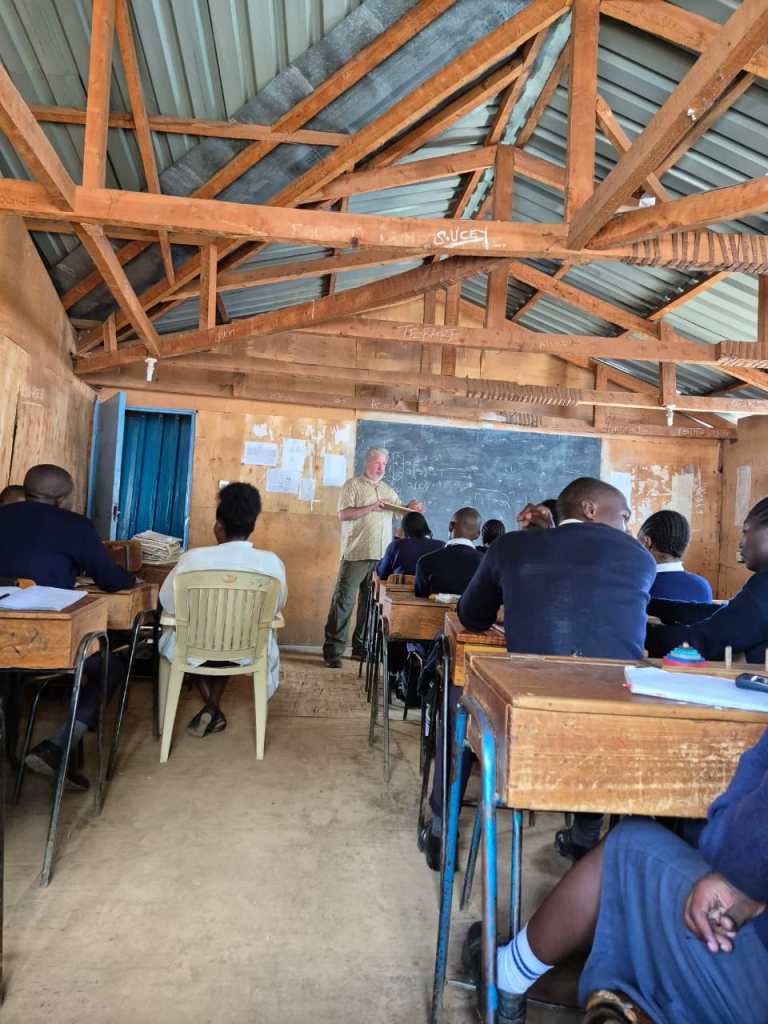
Next, we made our way to the largest slum in Africa, Kibra. It felt disrespectful to me to take pictures but it was an eye opening experience and the children especially obviously were very captivated by the appearance of an old white guy. Their word for foreigners (NOT a racial slur, just a label), is Mzungu. Needless to say, I heard this word many times! We worked our way on foot through the narrow dirt lanes formed by the sheet metal houses and shops that were teeming with activity and life to a small courtyard with a two story building that was the Academia School of Kibra. It is a private school funded completely by donations and benefactors. The Principal, teachers, and students couldn’t have been more gracious hosts. We moved upstairs to the form 6 students (similar in age to our 12th grade) where we were introduced. There was a notable increase in formality and discipline and the students were even more soft spoken and tended to communicate more in Swahili, but they understood my English completely and were very willing to jump right into the activity that I had with the same enthusiasm and openness of any student. They were eager to call me over to check their solutions, very insightful about problem solving strategies, and willing to take coaching: basically like any eager learner.
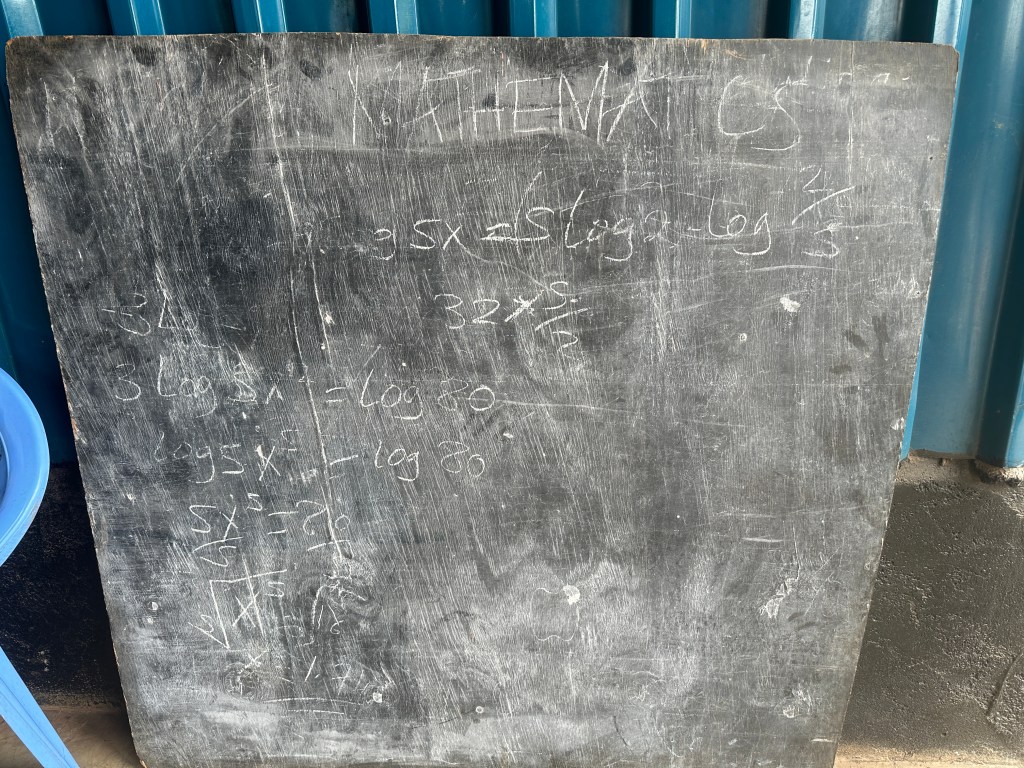
After that, we switched rooms and joined the science club for a session. Many of these students were also in the previous lesson, so I decided to shift activities and do some unit origami with them. This was a bit more challenging as even with my own students, it is always very challenging to use precise language to communicate directions in a way for the students to understand. However, they were focused and patient and I had some really fun, genuine one on one interactions as I was helping the students. Not everyone was able to complete the cube construction in the time we had, but enough did that they would be able to help each if there was interest. Even though we took the puzzles and the origami paper to use with a village school we were visiting the next day, Paul will return to meet with them to see if we can arrange a follow up visit but at the very least to bring the puzzles and paper back for them to use with future classes. It was both a humbling and energizing experience. There was a blackboard outside one of the classrooms with some nice algebra with logarithms that would elicit groaning from my students and I couldn’t resist snapping a quick picture. I should also note that from my work with TI, I knew that most of Africa and Asia uses Casio and all the schools that I visited had Casio calculators for each student.
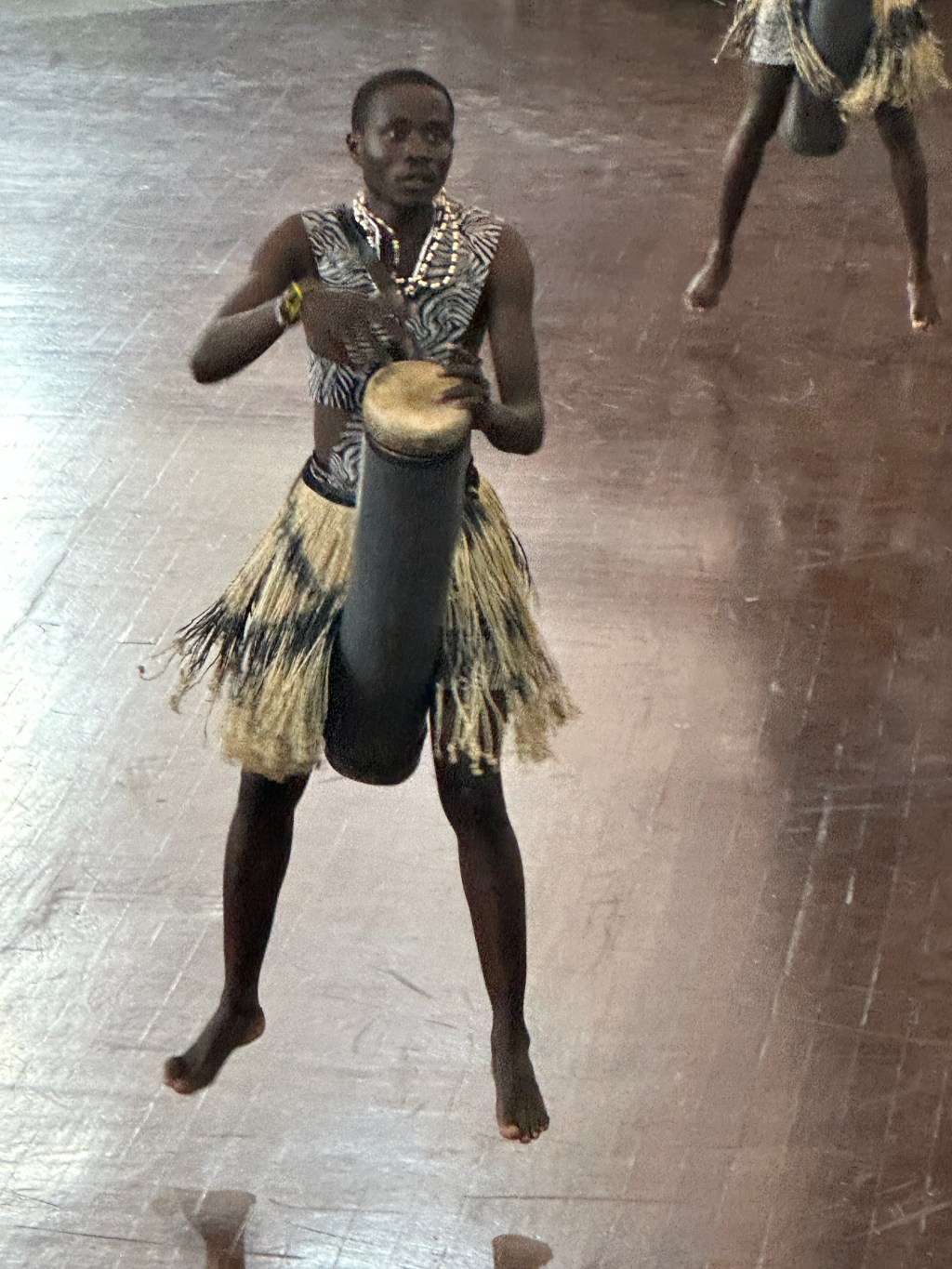
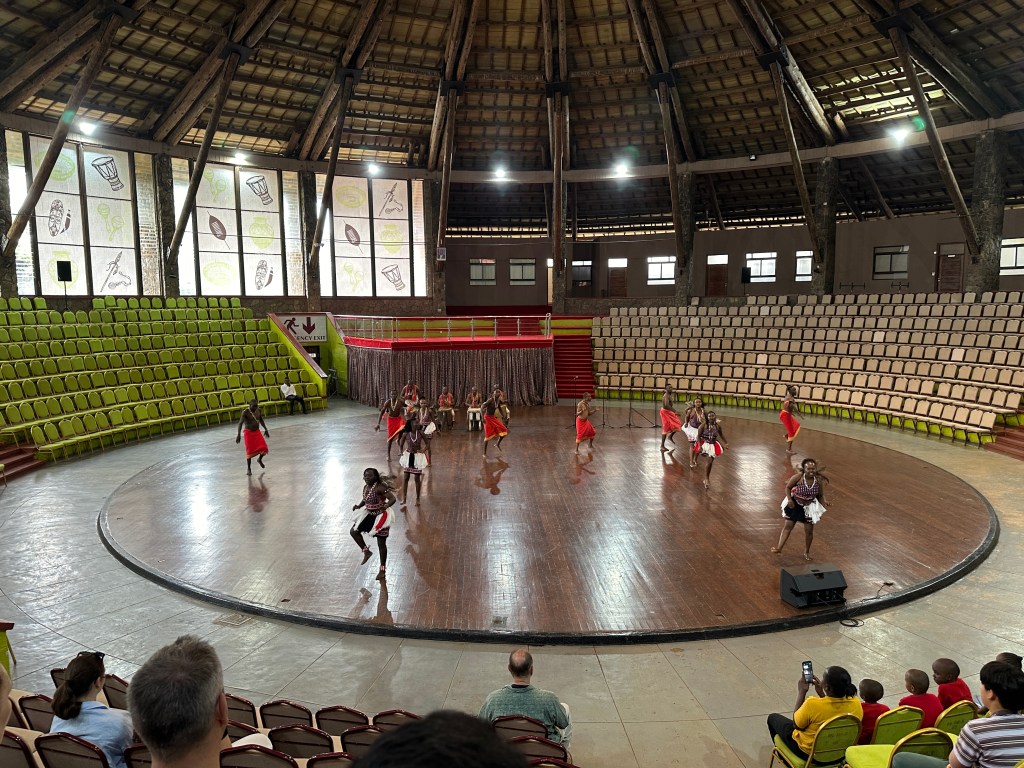
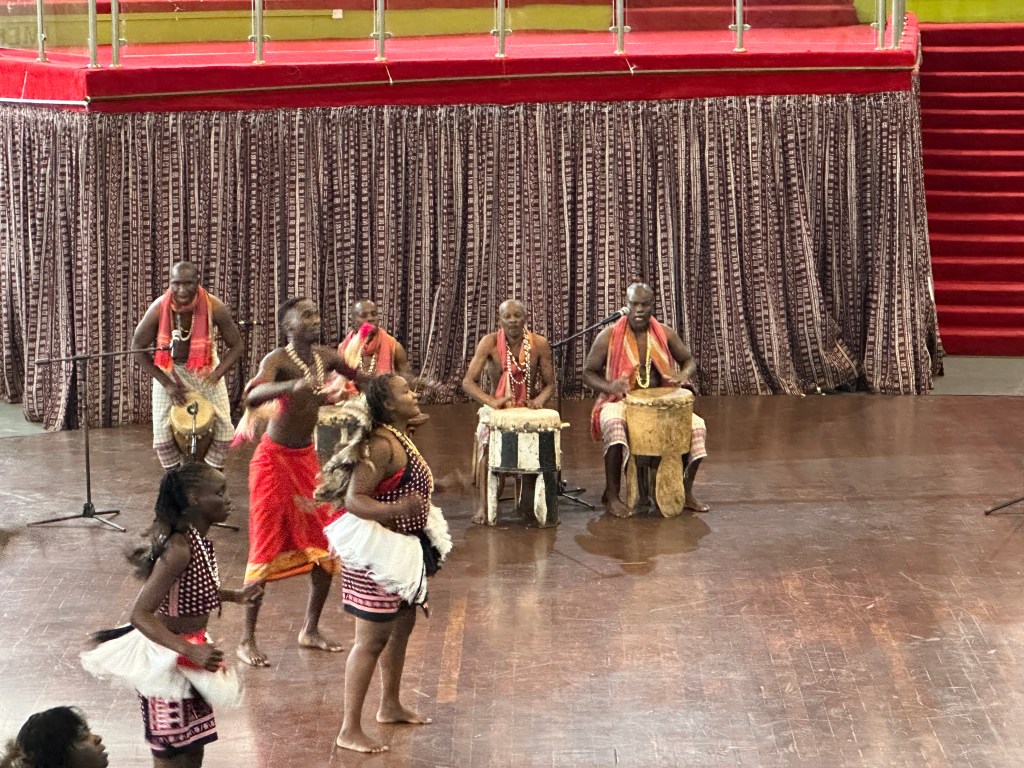
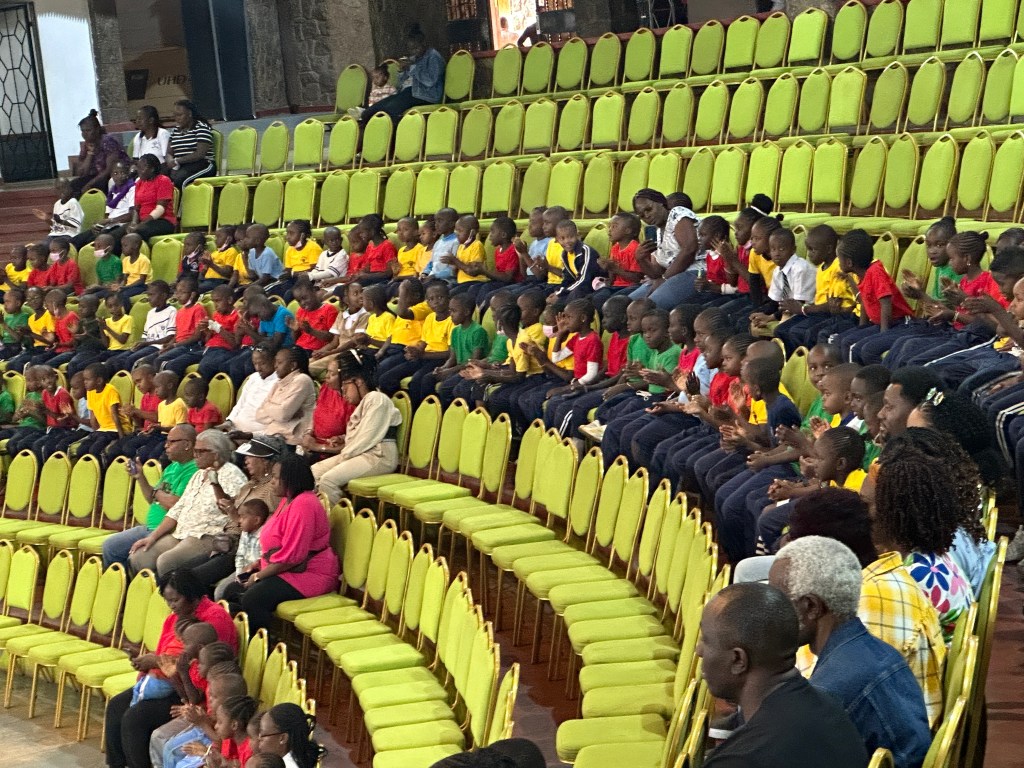
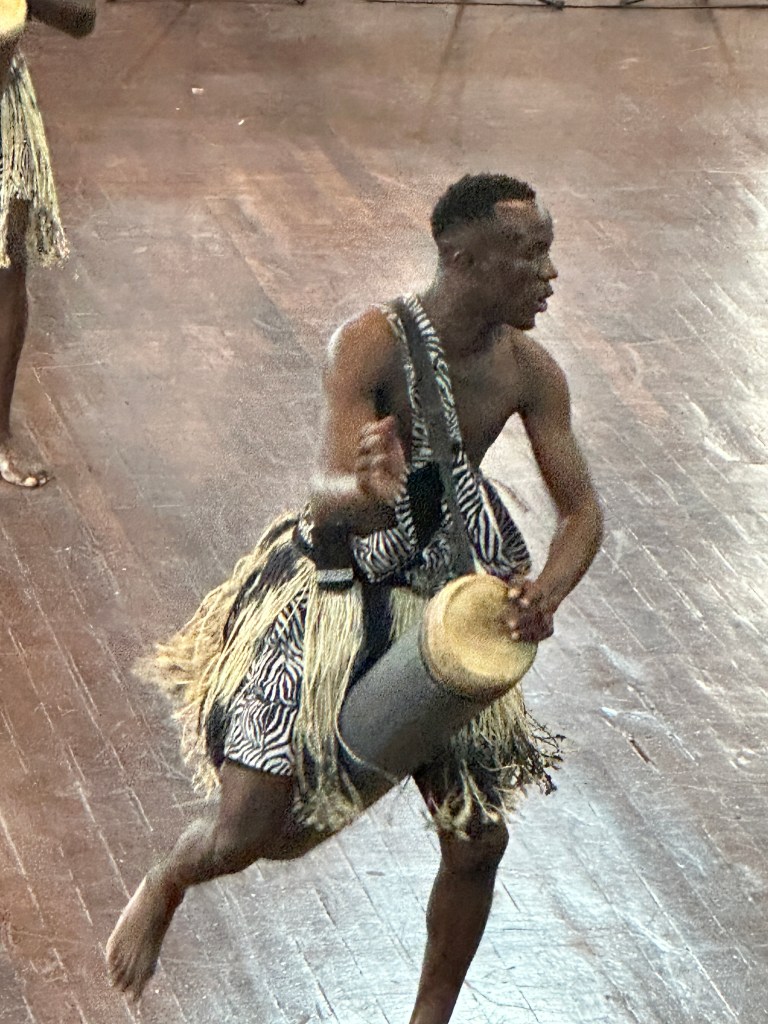
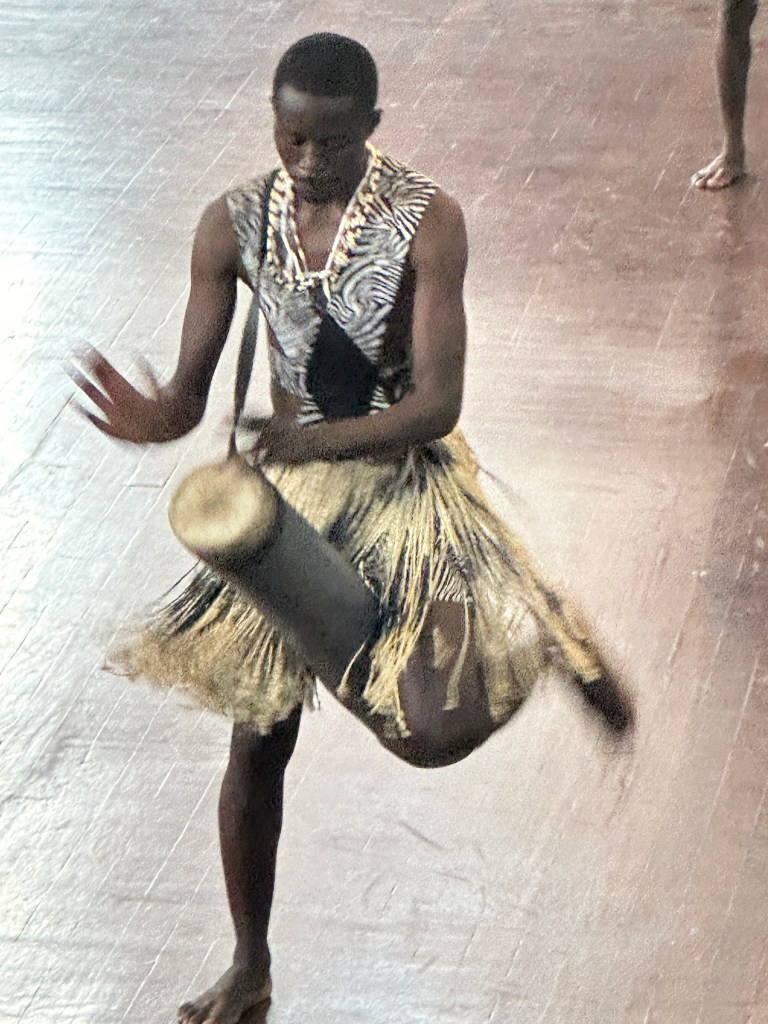
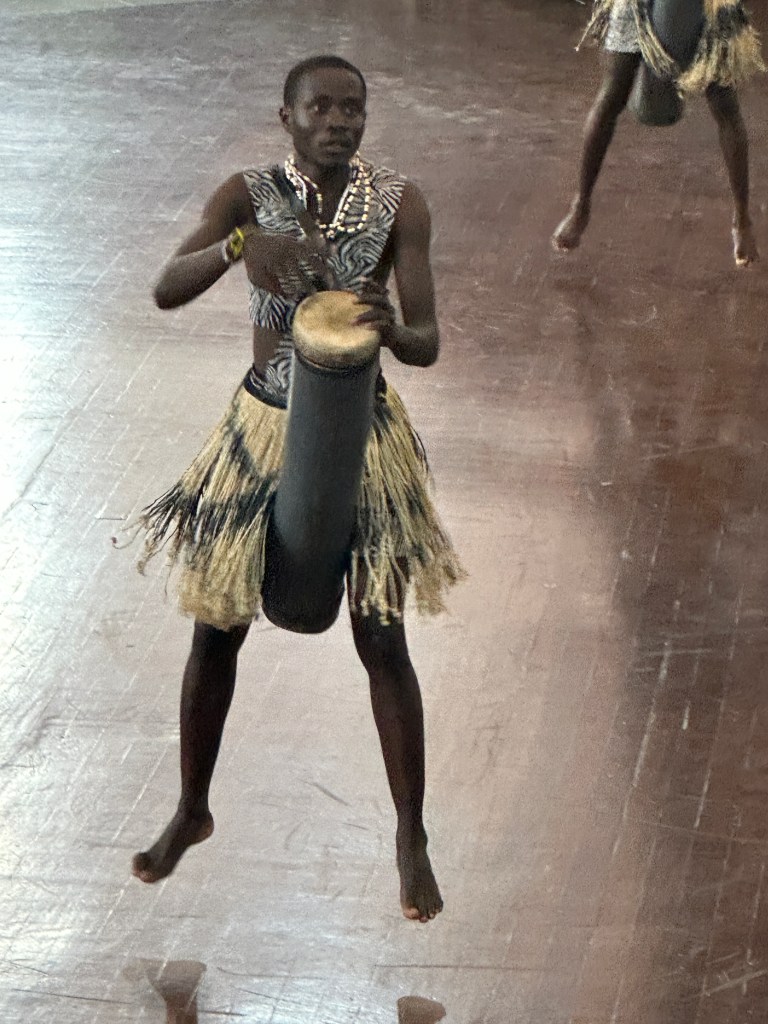
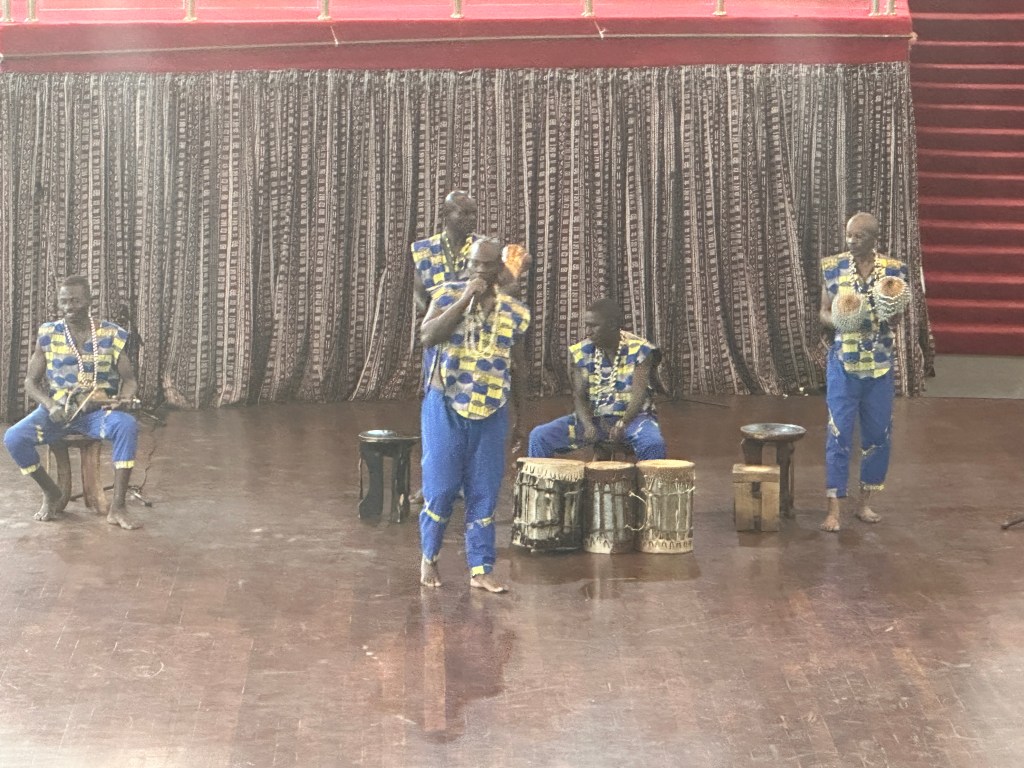
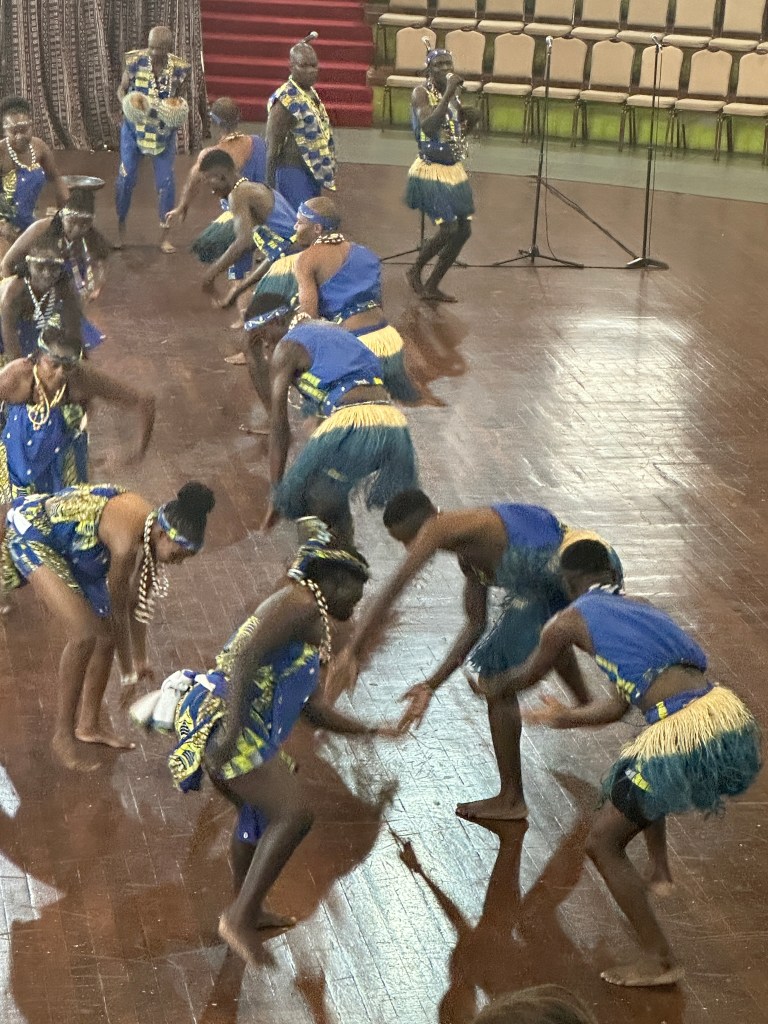
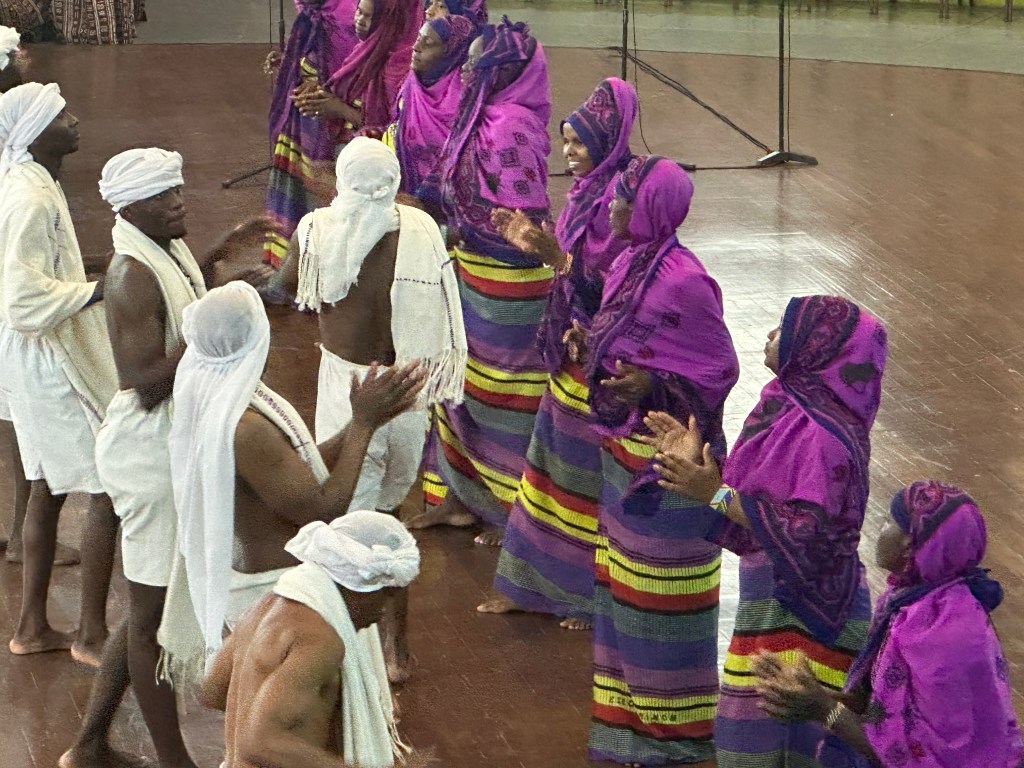
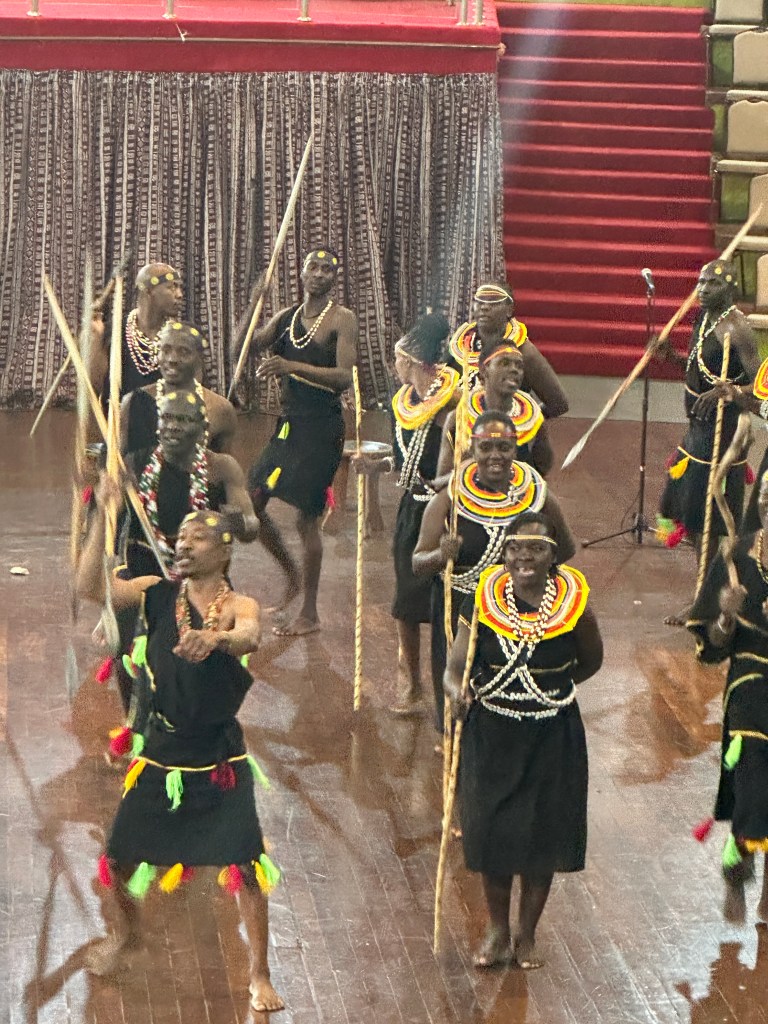
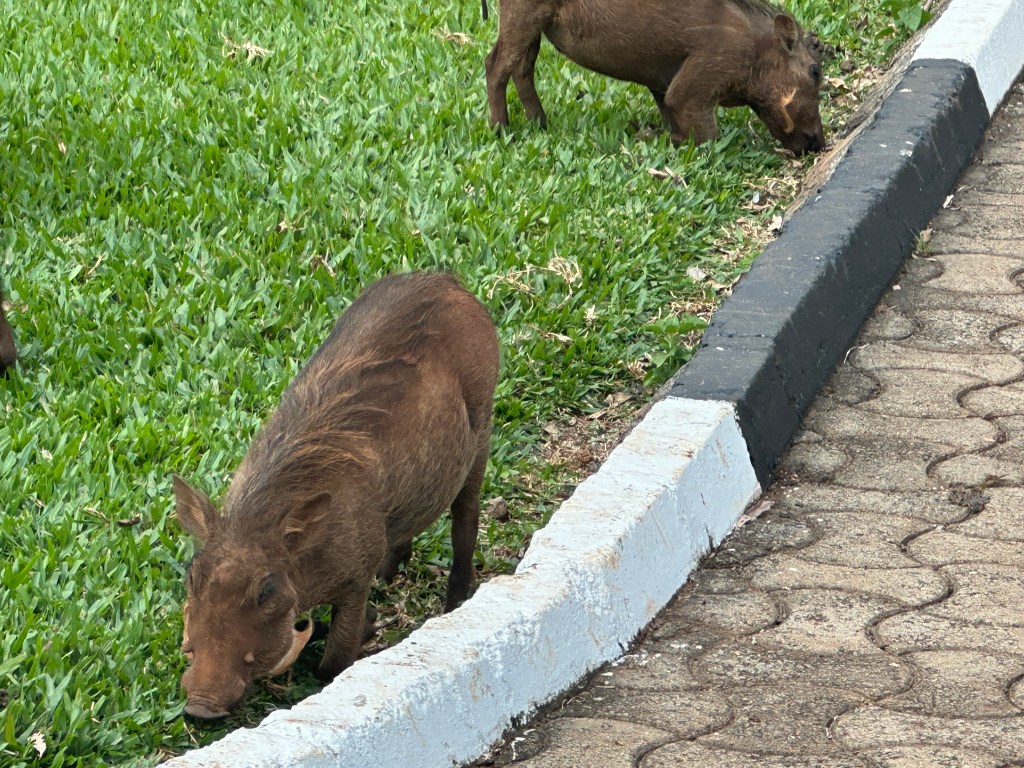
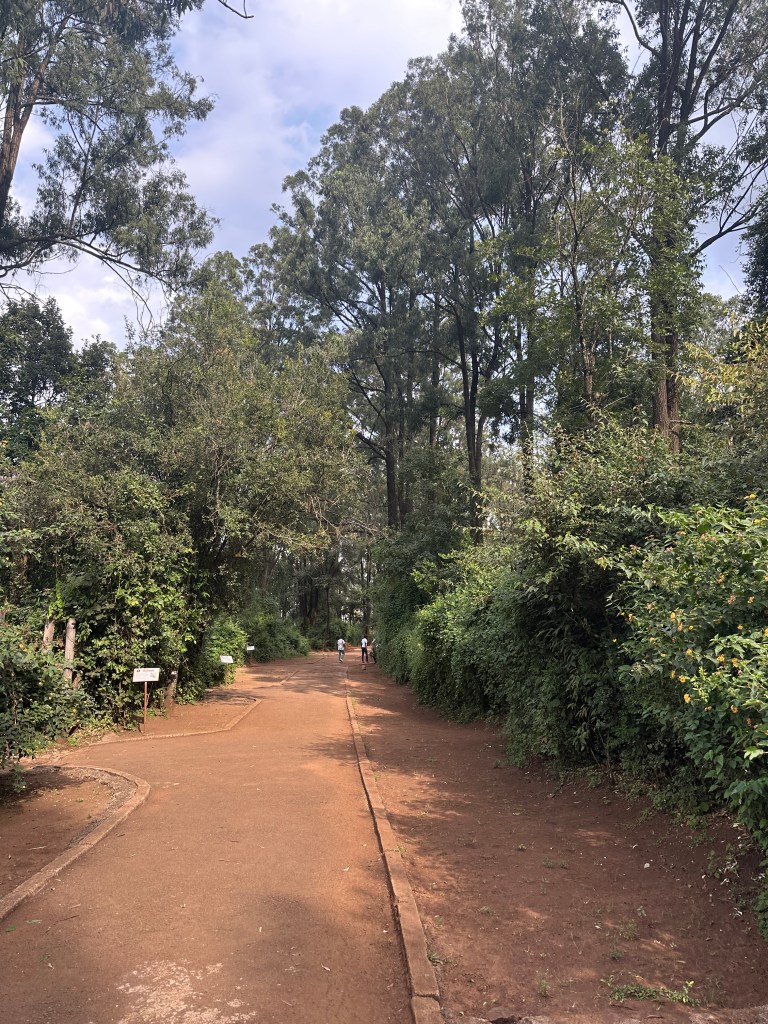
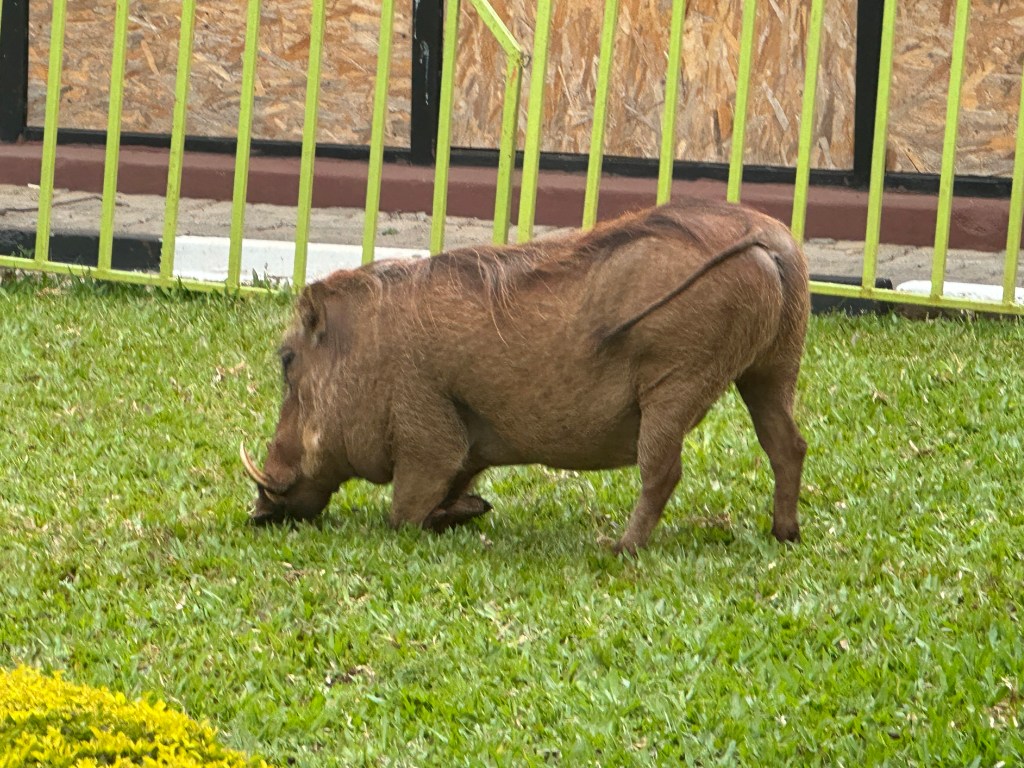
Our third and final activity for the day was a visit to Bomas of Kenya, which is a performance of dances and music from the various tribes all over Kenya in a large auditorium that is also used for national elections. It was very fast paced and entertaining. I was able to avoid the usual call for the Mzungu to join in some of the dancing, but I know that my students will relish the opportunity to participate. This was followed by very interesting guided walk through a beautiful forest containing recreations of the different traditional village structures of the various 45 tribes of Kenya. There were also a lot of Pumba and Baboons wandering the grounds. I returned to my hotel after a long day for a quiet dinner and an early night in preparation for a very early departure the next morning.






 Kenya 2024: Zekavat Summer Sabbatical
Leave a reply to Diana Day Cancel reply